Smash
CLIENT
Situation Interactive
TECHNOLOGIES
WordPress, PHP, JavaScript, Gravity Forms
YEAR
2025
EXTERNAL URL
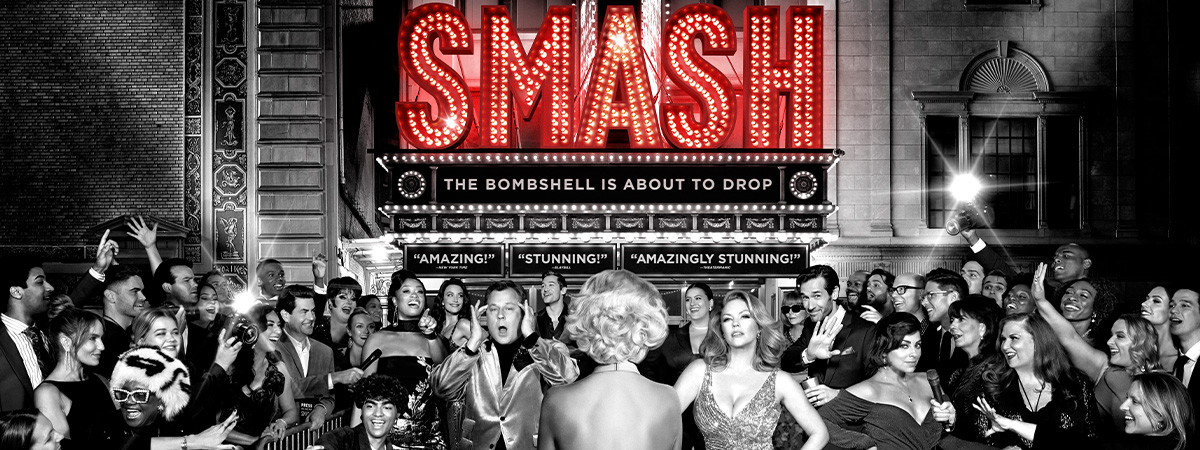
A TV-to-stage adaptation backed by Steven Spielberg, with the kind of bold visual identity that made the frontend work genuinely fun. Custom WordPress theme with a cinematic hero layout built around embedded video and gradient backgrounds — one of the most visually ambitious builds in my Broadway portfolio.
Drove the complete build at Situation Interactive.
Background
A cult-favorite television series was finally becoming the Broadway musical it always pretended to be.
Smash — the NBC series that ran for two seasons in 2012-2013, following the drama behind a fictional Broadway musical about Marilyn Monroe — had spent over a decade as one of the most passionate “what if” stories in musical theatre fandom. The show about making a Broadway musical was finally becoming an actual Broadway musical. Original series producers Steven Spielberg, Robert Greenblatt, and Neil Meron led the effort, with five-time Tony winner Susan Stroman directing, a score by Emmy, Grammy, and Tony winners Marc Shaiman and Scott Wittman, a book by Bob Martin and Rick Elice, and choreography by Emmy winner Joshua Bergasse. The cast featured Robyn Hurder as Ivy Lynn, Brooks Ashmanskas, Krysta Rodriguez, Caroline Bowman, John Behlmann, and Kristine Nielsen. TV-to-stage is a particular kind of adaptation challenge — different from the novel adaptation of The Outsiders or the film-to-stage journey of Mean Girls — because the existing audience already has specific visual and tonal expectations. The digital platform needed to honor that familiarity while establishing the stage production as its own thing.
The fan base was already there — the site’s job was to channel a decade of anticipation into opening-week ticket sales at the Imperial Theatre.
Implementation
A custom WordPress build with a hero layout that demanded precision and a ticketing calendar driving every conversion.
The frontend was the defining challenge — and the most enjoyable part of the build. The hero section was the centerpiece: an embedded video composition layered over a gradient background that needed to feel cinematic without sacrificing load performance or responsiveness. Getting the video, gradient, and typographic elements to hold together across breakpoints — maintaining visual impact on desktop while gracefully adapting on mobile where the composition fundamentally changes — required careful CSS architecture and an understanding of how each layer interacted with the others. The broader layout pushed well beyond standard Broadway site conventions, with bold compositional choices throughout that made the frontend work consistently engaging. The ticketing infrastructure was mature by this point in my portfolio — the calendar, availability states, and deep-linking to checkout flows followed established patterns — so I could focus energy on the visual storytelling. The site rounded out with cast and creative team profiles, a media section with video content and production photography, press acclaim aggregating reviews from the New York Times and Rolling Stone, a merchandise shop, and a cast recording promotion section.
The frontend work on this build was some of the most fun I have had on a project — the kind of layout challenges where the design is bold enough to push you but clean enough that the solutions feel satisfying when they land.
Results
Two Tony nominations, a Drama Desk win, and $12.6 million at the box office.
Smash opened on April 10, 2025 and ran through June 22 — 32 previews and 83 performances grossing over $12.6 million at an average capacity of 82.50% and an average ticket price of $94.34. The production earned two Tony Award nominations — Best Featured Actor in a Musical for Brooks Ashmanskas and Best Choreography for Joshua Bergasse — along with a Drama Desk Award for Outstanding Featured Performance in a Musical (Ashmanskas) and a Chita Rivera Award for Outstanding Dancer in a Broadway Show (Robyn Hurder). The site now serves as an archival platform preserving the production’s legacy, press coverage, and cast recording. Not every show runs for years — but the platform delivered exactly what it needed to during a concentrated, high-energy Broadway engagement.